Friday, November 18, 2022

                                                                   Ear Infection


Overview


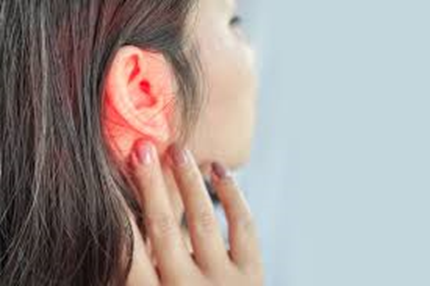
An ear infection (sometimes called acute otitis media) is an infection of the middle ear, the air-filled space behind the eardrum that contains the tiny vibrating bones of the ear. Children are more likely than adults to get ear infections.


Because ear infections often clear up on their own, treatment may begin with managing pain and monitoring the problem. Sometimes, antibiotics are used to clear the infection. Some people are prone to having multiple ear infections. This can cause hearing problems and other serious complications.


Children

Signs and symptoms common in children include:


Ear pain, especially when lying down

Tugging or pulling at an ear

Trouble sleeping

Crying more than usual

Fussiness

Trouble hearing or responding to sounds

Loss of balance

Fever of 100 F (38 C) or higher

Drainage of fluid from the ear

Headache

Loss of appetite

Adults

Common signs and symptoms in adults include: 


Ear pain

Drainage of fluid from the ear

Trouble hearing

When to see a doctor

Signs and symptoms of an ear infection can indicate several conditions. It is important to get an accurate diagnosis and prompt treatment. Call your child's doctor if:


Symptoms last for more than a day

Symptoms are present in a child less than 6 months of age

Ear pain is severe

Your infant or toddler is sleepless or irritable after a cold or other upper respiratory infection

You observe a discharge of fluid, pus, or bloody fluid from the ear

Subscribe!

Causes

The inside of your ear

An ear infection is caused by a bacterium or virus in the middle ear. This infection often results from another illness — cold, flu or allergy — that causes congestion and swelling of the nasal passages, throat and eustachian tubes.

Role of eustachian tubes

The eustachian tubes are a pair of narrow tubes that run from each middle ear to high in the back of the throat, behind the nasal passages. The throat end of the tubes open and close to:


Regulate air pressure in the middle ear

Refresh air in the ear

Drain normal secretions from the middle ear

Swollen eustachian tubes can become blocked, causing fluids to build up in the middle ear. This fluid can become infected and cause the symptoms of an ear infection.


In children, the eustachian tubes are narrower and more horizontal, which makes them more difficult to drain and more likely to get clogged.


Role of adenoids

Adenoids are two small pads of tissues high in the back of the nose believed to play a role in immune system activity.


Because adenoids are near the opening of the eustachian tubes, swelling of the adenoids may block the tubes. This can lead to middle ear infection. Swelling and irritation of adenoids is more likely to play a role in ear infections in children because children have relatively larger adenoids compared to adults.


Related conditions

Conditions of the middle ear that may be related to an ear infection or result in similar middle ear problems include:


Otitis media with effusion or swelling and fluid buildup (effusion) in the middle ear without bacterial or viral infection. This may occur because the fluid buildup persists after an ear infection has gotten better. It may also occur because of some dysfunction or noninfectious blockage of the eustachian tubes.

Chronic otitis media with effusion, occurs when fluid remains in the middle ear and continues to return without bacterial or viral infection. This makes children susceptible to new ear infections and may affect hearing.

Chronic suppurative otitis media, an ear infection that does not go away with the usual treatments. This can lead to a hole in the eardrum.

Risk factors


Risk factors for ear infections include:

Age. Children between the ages of 6 months and 2 years are more susceptible to ear infections because of the size and shape of their eustachian tubes and because their immune systems are still developing.

Group childcare. Children cared for in group settings are more likely to get colds and ear infections than are children who stay home. The children in group settings are exposed to more infections, such as the common cold.

Infant feeding. Babies who drink from a bottle, especially while lying down, tend to have more ear infections than do babies who are breast-fed.

Seasonal factors. Ear infections are most common during the fall and winter. People with seasonal allergies may have a greater risk of ear infections when pollen counts are high.

Poor air quality. Exposure to tobacco smoke or elevated levels of air pollution can increase the risk of ear infections.

Alaska Native heritage. Ear infections are more common among Alaska Natives.

Cleft palate. Differences in the bone structure and muscles in children who have cleft palates may make it more difficult for the eustachian tube to drain.

Complications

Most ear infections do not cause long-term complications. Ear infections that happen repeatedly can lead to serious complications

Impaired hearing. Mild hearing loss that comes and goes is fairly common with an ear infection, but it usually gets better after the infection clears. Ear infections that happen again and again, or fluid in the middle ear, may lead to more-significant hearing loss. If there is some permanent damage to the eardrum or other middle ear structures, permanent hearing loss may occur.

Speech or developmental delays. If hearing is temporarily or permanently impaired in infants and toddlers, they may experience delays in speech, social and developmental skills.

Spread of infection. Untreated infections or infections that do not respond well to treatment can spread to nearby tissues. Infection of the mastoid, the bony protrusion behind the ear, is called mastoiditis. This infection can result in damage to the bone and the formation of pus-filled cysts. Rarely, serious middle ear infections spread to other tissues in the skull, including the brain or the membranes surrounding the brain (meningitis).

Tearing of the eardrum. Most eardrum tears heal within 72 hours. In some cases, surgical repair is needed.

Prevention

The following tips may reduce the risk of developing ear infections:


Prevent common colds and other illnesses. Teach your children to wash their hands frequently and thoroughly and to not share eating and drinking utensils. Teach your children to cough or sneeze into their elbow. If possible, limit the time your child spends in group childcare. A childcare setting with fewer children may help. Try to keep your child home from childcare or school when ill.

Avoid secondhand smoke. Make sure that no one smokes in your home. Away from home, stay in smoke-free environments.

Breast-feed your baby. If possible, breast-feed your baby for at least six months. Breast milk contains antibodies that may offer protection from ear infections.

If you bottle-feed, hold your baby in an upright position. Avoid propping a bottle in your baby's mouth while he or she is lying down. Do not put bottles in the crib with your baby.

Talk to your doctor about vaccinations. Ask your doctor about what vaccinations are appropriate for your child. Seasonal flu shots, pneumococcal and other bacterial vaccines may help prevent ear infections.


Jan Ricks Jennings, MHA, LFACHE

Senior Consultant

Senior Management Resources, LLC


Jan.Jennings@EagleTalons.net

JanJenningsBlog.Blogspot.com


724.733.0509 Office

412.913.0636 Cell


Tuesday, November 15, 2022


Color Blindness


Overview


Color blindness — or more accurately, poor or deficient color vision — is an inability to see the difference between certain colors. Though many people commonly use the term "color blind" for this condition, true color blindness — in which everything is seen in shades of black and white — is rare.


Color blindness is usually inherited. Men are more likely to be born with color blindness. Most people with color blindness can't distinguish between certain shades of red and green. Less commonly, people with color blindness can't distinguish between shades of blue and yellow.


Certain eye diseases and some medications also can cause color blindness.


Symptoms

You may have a color vision deficiency and not know it. Some people figure out that they or their child has the condition when it causes confusion — such as when there are problems differentiating the colors in a traffic light or interpreting color-coded learning materials.


People affected by color blindness may not be able to distinguish:


Different shades of red and green

Different shades of blue and yellow

Any colors

The most common color deficiency is an inability to see some shades of red and green. Often, a person who is red-green or blue-yellow deficient isn't completely insensitive to both colors. Defects can be mild, moderate or severe.


When to see a doctor

If you suspect you have problems distinguishing certain colors or your color vision changes, see an eye doctor for testing. It's important that children get comprehensive eye exams, including color vision testing, before starting school.


There's no cure for inherited color deficiencies, but if illness or eye disease is the cause, treatment may improve color vision.


Causes

Seeing colors across the light spectrum is a complex process that begins with your eyes' ability to respond to different wavelengths of light.


Light, which contains all color wavelengths, enters your eye through the cornea and passes through the lens and transparent, jellylike tissue in your eye (vitreous humor) to wavelength-sensitive cells (cones) at the back of your eye in the macular area of the retina. The cones are sensitive to short (blue), medium (green) or long (red) wavelengths of light. Chemicals in the cones trigger a reaction and send the wavelength information through your optic nerve to your brain.


If your eyes are normal, you perceive color. But if your cones lack one or more wavelength-sensitive chemicals, you will be unable to distinguish the colors red, green or blue.


Color blindness has several causes:


Inherited Disorder.  color deficiencies are much more common in males than in females. The most common color deficiency is red-green, with blue-yellow deficiency being much less common. It is rare to have no color vision at all.


You can inherit a mild, moderate or severe degree of the disorder. Inherited color deficiencies usually affect both eyes, and the severity doesn't change over your lifetime.


Diseases. Some conditions that can cause color deficits are sickle cell anemia, diabetes, macular degeneration, Alzheimer's disease, multiple sclerosis, glaucoma, Parkinson's disease, chronic alcoholism and leukemia. One eye may be more affected than the other, and the color deficit may get better if the underlying disease can be treated.

Certain medications. Some medications can alter color vision, such as some drugs that treat certain autoimmune diseases, heart problems, high blood pressure, erectile dysfunction, infections, nervous disorders and psychological problems.

Aging. Your ability to see colors deteriorates slowly as you age.

Chemicals. Exposure to some chemicals in the workplace, such as carbon disulfide and fertilizers, may cause loss of color vision.


P.S.  Dwight Eugene Gooden (born November 16, 1964), nicknamed "Dr. K" and "Doc", is an American former professional baseball pitcher who played 16 seasons in Major League Baseball (MLB). Gooden pitched from 1984 to 1994 and from 1996 to 2000 for the New York Mets, New York Yankees, Cleveland Indians, Houston Astros, and Tampa Bay Devil Rays. In a career spanning 430 games, he pitched 2,800+2⁄3 innings and posted a win–loss record of 194–112, with a 3.51 earned run average (ERA), and 2,293 strikeouts.  He will be 58 years old on November 16th.


Jan Ricks Jennings, MHA, LFACHE

Senior Consultant

Senior Management Resources, LLC


Jan.Jennings@EagleTalons.net

JanJenningsBlog.BlogSpot.com


724.733.0509 Office

412.913.0636 Cell

Sunday, November 13, 2022


Domestic Violence Against Men


Women aren't the only victims of domestic violence.

Domestic violence against men isn't always easy to identify, but it can be a serious threat. Know how to recognize if you're being abused — and how to get help.

Recognize domestic violence against men

Occurs between people who are or have been in a close relationship. Domestic violence can take many forms, including emotional, sexual and physical abuse, stalking and threats of abuse. It can happen in heterosexual or same-sex relationships.

Abusive relationships always involve an imbalance of power and control. An abuser uses intimidating, hurtful words and behaviors to control his or her partner.

It might not be easy to recognize domestic violence against men. Early in the relationship, your partner might seem attentive, generous and protective in ways that later turn out to be controlling and frightening. Initially, the abuse might appear as isolated incidents. Your partner might apologize and promise not to abuse you again.

You might be experiencing domestic violence if your partner:

Calls you names, insults you or puts you down

Prevents you from going to work or school

Stops you from seeing family members or friends

Tries to control how you spend money, where you go or what you wear

Acts jealous or possessive or constantly accuses you of being unfaithful

Gets angry when drinking alcohol or using drugs

Tries to control whether you can see a health care provider

Threatens you with violence or a weapon

Hits, kicks, shoves, slaps, chokes or otherwise physically hurts you, your children or your pets

Forces you to have sex or engage in sexual acts against your will

Blames you for his or her violent behavior or tells you that you deserve it

Threatens to tell friends, family, colleagues or community members your sexual orientation or gender identity

If you're gay, bisexual or transgender, you might also be experiencing domestic violence if you're in a relationship with someone who:


Tells you that authorities won't help a gay, bisexual or transgender person

Tells you that leaving the relationship means you're admitting that gay, bisexual or transgender relationships are deviant

Justifies abuse by telling you that you're not "really" gay, bisexual or transgender

Says that men are naturally violent

Don't take the blame

You may not be sure whether you're the victim or the abuser. It's common for survivors of domestic violence to act out verbally or physically against the abuser, yelling, pushing, or hitting him or her during conflicts. The abuser may use such incidents to manipulate you, describing them as proof that you are the abusive partner.


You may have developed unhealthy behaviors. Many survivors do. That doesn't mean you are at fault for the abuse.


If you're having trouble identifying what's happening, take a step back and look at larger patterns in your relationship. Then, review the signs of domestic violence. In an abusive relationship, the person who routinely uses these behaviors is the abuser. The person on the receiving end is being abused.


Even if you're still not sure, seek help. Intimate partner violence causes physical and emotional damage — no matter who is at fault.


Children and abuse

Domestic violence affects children, even if no one is physically attacking them. If you have children, remember that being exposed to domestic violence makes them more likely to have developmental problems, psychiatric disorders, problems at school, aggressive behavior and low self-esteem. You might worry that seeking help could further endanger you and your children, or that it might break up your family. Fathers might fear that abusive partners will try to take their children away from them. However, getting help is the best way to protect your children — and yourself.


Break the cycle

If you're in an abusive situation, you might recognize this pattern:


Your abuser threatens violence.

Your abuser strikes you.

Your abuser apologizes, promises to change and offers gifts.

The cycle repeats itself.

Typically the violence becomes more frequent and severe over time.


Domestic violence can leave you depressed and anxious, and can increase your risk of having a drug or alcohol problem. Because men are traditionally thought to be physically stronger than women, you might be less likely to report domestic violence in your heterosexual relationship due to embarrassment. You might also worry that people will minimize the importance of the abuse because you're a man. Similarly, a man being abused by another man might be reluctant to talk about the problem because of how it reflects on his masculinity or because it exposes his sexual orientation.


If you seek help, you also might find that there are fewer resources for male victims of domestic violence. Health care providers and other contacts might not think to ask if your injuries were caused by domestic violence, making it harder to open up about abuse. You might fear that if you talk to someone about the abuse, you'll be accused of wrongdoing yourself. Remember, though, if you're being abused, you aren't to blame — and help is available.


Start by telling someone about the abuse, whether it's a friend, relative, health care provider or other close contact. At first, you might find it hard to talk about the abuse. However, you'll also likely feel relief and receive much-needed support.


Create a safety plan

Leaving an abuser can be dangerous. Consider taking these precautions:


Call a domestic violence hotline for advice. Make the call at a safe time — when the abuser isn't around — or from a friend's house or other safe location.

Pack an emergency bag that includes items you'll need when you leave, such as extra clothes and keys. Leave the bag in a safe place. Keep important personal papers, money and prescription medications handy so that you can take them with you on short notice.

Know exactly where you'll go and how you'll get there.

Protect your communication and location.

An abuser can use technology to monitor your telephone and online communication and to track your physical location. If you're concerned for your safety, seek help. To maintain your privacy:


Use phones cautiously. Your abuser might intercept calls and listen to your conversations. He or she might use caller ID, check your cellphone or search your phone billing records to see your complete call and texting history.

Use your home computer cautiously. Your abuser might use spyware to monitor your emails and the websites you visit. Consider using a computer at work, at the library or at a friend's house to seek help.

Remove GPS devices from your vehicle. Your abuser might use a GPS device to pinpoint your location.

Frequently change your email password. Choose passwords that would be impossible for your abuser to guess.

Clear your viewing history. Follow your browser's instructions to clear any record of websites or graphics you've viewed.


Where to seek help


In an emergency, call 911 — or your local emergency number or law enforcement agency. The following resources also can help


Someone you trust. Turn to a friend, relative, neighbor, co-worker, or religious or spiritual adviser for support.

National Domestic Violence Hotline: 800-799-SAFE (800-799-7233). The hotline provides crisis intervention and referrals to resources.

Your health care provider. Doctors and nurses will treat injuries and can refer you to other local resources.

A counseling or mental health center. Counseling and support groups for people in abusive relationships are available in most communities.

A local court. Your district court can help you obtain a restraining order that legally mandates the abuser to stay away from you or face arrest. Local advocates may be available to help guide you through the process.

Domestic violence against men can have devastating effects. Although you may not be able to stop your partner's abusive behavior, you can seek help. Remember, no one deserves to be abused.


Jan Ricks Jennings, MHA, LFACHE

Senior Consultant

Senior Management Resources, LLC


Jan.Jennings@EagleTalons.net

JanJenningsBlog.Blogspot.com


412.913.0636 Cell

724.733.0509 Office

Saturday, November 5, 2022


Decompression sickness


Decompression sickness (DCS) is a type of injury that occurs when there is a rapid decrease in pressure surrounding the body.


It usually occurs in deep-sea divers who ascend to the surface too quickly. But it can also occur in hikers descending from a high altitude, astronauts returning to Earth, or in tunnel workers who are in an environment of compressed air.


With decompression sickness, gas bubbles can form in the blood and tissues. If you believe you’re experiencing decompression sickness, it’s important to seek medical attention immediately. This condition can be fatal if it’s not treated quickly.


Who commonly experiences this?

While DCS can affect anyone moving from high altitudes to low altitudes, such as hikers and those who work in aerospace and aviation flights, it’s most common in scuba divers.


Your risk for decompression sickness increases if you:


have a heart defect

are dehydrated

take a flight after diving

have overexerted yourself

are fatigued

have obesity

are elderly

dive in cold water

In general, decompression sickness becomes more of a risk the deeper you dive. But it can occur after a dive of any depth. That’s why it’s important to ascend to the surface slowly and gradually.


If you’re new to diving, always go with an experienced dive master who can control the ascent. They can make sure it’s done safely.


Decompression sickness symptoms

Common symptoms of DCS may include:


fatigue

weakness

pain in muscles and joints

headache

lightheadedness or dizziness

confusion

vision problems, such as double vision

stomach pain

chest pain or coughing

shock

vertigo

More uncommonly, you may also experience:


muscle inflammation

itching

rash

swollen lymph nodes

extreme fatigue


Experts classify decompression sickness with symptoms affecting the skin, musculoskeletal, and lymphatic systems as type 1. Type 1 is sometimes called the bends.


In type 2, a person will experience symptoms affecting the nervous system. Sometimes, type 2 is called the chokes.


How long does it take for DCS to happen?

The symptoms of decompression sickness may appear rapidly. For scuba divers, they may start within an hour after a dive. You or your companion may appear visibly ill. Look out for:


dizziness

a change in gait when walking

weakness

unconsciousness, in more serious cases

These symptoms indicate a medical emergency. If you experience any of these, contact your local emergency medical services immediately.


CONTACT EMERGENCY SERVICES

Call local emergency services or DAN’s 24-hour emergency line at +1-919-684-9111.You can also contact the Diver’s Alert Network (DAN), which operates an emergency phone line 24 hours a day. They can assist with evacuation assistance and help you locate a recompression chamber nearby.

In more mild cases, you may not notice symptoms until a few hours or even days after a dive. You should still seek medical care in those cases.

How does decompression sickness happen?

If you move from an area of high pressure to low pressure, nitrogen gas bubbles can form in the blood or tissues. The gas is then released into the body if the outside pressure is relieved too quickly. This can lead to obstructed blood flow and cause other pressure effects.


What to do

Contact emergency services

Watch for symptoms of decompression sickness. These are a medical emergency, and you should seek emergency medical services immediately.


Contact DAN

You can also contact DAN, which operates an emergency phone line 24 hours a day. They can assist with evacuation assistance and help you locate a hyperbaric chamber nearby. Contact them at +1-919-684-9111.


Concentrated oxygen

In more mild cases, you may not notice symptoms until a few hours or even days after a dive. You should still seek medical care. In mild cases, treatment may include breathing 100 percent oxygen from a mask.


Recompression therapy

The treatment for more serious cases of DCS involves recompression therapy, which is also known as hyperbaric oxygen therapy.


With this treatment, you’ll be taken to a sealed chamber where air pressure is three times higher than normal. This unit may fit one person. Some hyperbaric chambers are larger and can fit several people at once. Your doctor may also order an MRI or a CT scan.


If recompression therapy is started promptly after a diagnosis, you may not notice any effects of DCS afterward.


However, there can be long-term physical effects, such as pain or soreness around a joint.


For severe cases, there may also be long-term neurological effects. In this case, physical therapy may be required. Work with your doctor, and keep them informed about any lasting side effects. Together, you can determine a care plan that’s right for you.


Prevention tips for diving

Do your safety stops

To prevent decompression sickness, most divers make a safety stop for a few minutes before ascending to the surface. This is usually done around 15 feet (4.5 meters) below the surface.


If you’re diving very deep, you may want to ascend and stop a few times to ensure your body has time to adjust gradually.


Talk to a dive master

If you’re not an experienced diver, you’ll want to go with a dive master who is familiar with safe ascents. They may follow the guidelines for air compression as outlined by the United States Navy.


Before you dive, talk to the dive master about an adjustment plan and how slowly you need to ascend to the surface.


Avoid flying that day

You should avoid flying or going up to high elevations for 24 hours after diving. This will give your body time to adjust to the change in altitude.


Additional preventive measures

Avoid alcohol 24 hours before and after diving.

Avoid diving if you have obesity, are pregnant, or have a medical condition.

Avoid back-to-back dives within a 12-hour period.

Avoid diving for 2 weeks to a month if you’ve experienced symptoms of decompression sickness. Return only after you’ve undergone a medical evaluation.

The takeaway

Decompression sickness can be a dangerous condition, and it needs to be treated immediately. Luckily, it’s preventable in most cases by following safety measures.


For scuba divers, there’s protocol in place to prevent decompression sickness. That’s why it’s important to always dive with a group led by an experienced dive maste


Jan Ricks Jennings, MHA, LFACHE

Senior Consultant

Senior Management Resoucres, LLC


Jan.Jennings@EagTalons.net

Jan.Jennings@EagleTalons.net


October 30, 2022